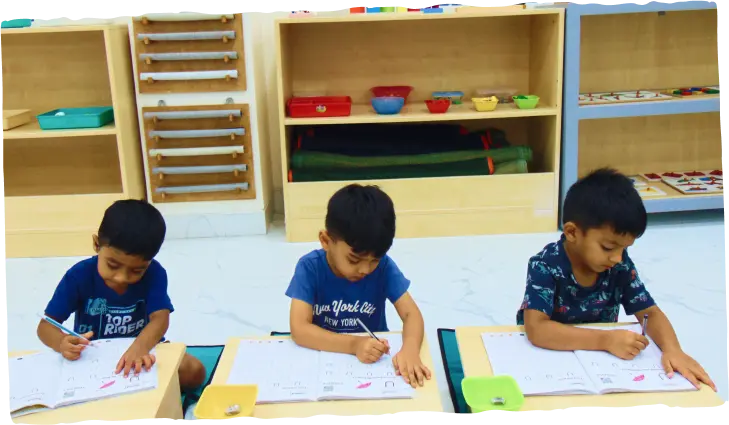
Knowing the preschool age in India helps parents plan. The National Education Policy (NEP) 2020 focuses on care and education for children aged 3 to 6. This stage is about learning by playing, building languages, and making friends.
Preschool programs in India usually follow this structure:
Every preschool has a defined preschool age requirement. These rules help schools place children at the right level and keep classrooms balanced.
For example, a child may need to be at least two years old by a specific date to join a Playgroup. These rules may feel strict, but they help ensure children are ready for the activities planned for their age group.
Parents should always check the school admission page to confirm the exact preschool age requirement before applying.
While schools follow official age rules, good preschools also consider readiness. This is where preschool age criteria go beyond dates on paper.
These factors help teachers understand if a child settles comfortably into preschool life. Age matters, but readiness shapes the experience.
The average age to start preschool in India is about 3 years. This age works well for many children because they are more social, can share their feelings, and are more settled.
At this stage, children often: .
Starting preschool around this age helps children build confidence while keeping learning fun and stress-free. .
Many parents worry about the preschool age limit, especially when their child misses a cutoff date by a few weeks or months.
Instead of focusing only on what age to start preschool, parents should watch for readiness signs. These signs show whether a child can handle preschool routines.
Common readiness signs include:
A child does not need to master everything. Preschool is a place to learn. These signs simply show that a child is ready to begin the journey.
Preparing your child at home makes preschool easier and less stressful. Simple daily habits help children adjust smoothly.
These habits support emotional readiness and make preschools feel familiar instead of scary.
If you are not sure if your child is ready for preschool, talk to our educators for advice.