
Preschool vs Montessori: The Key Differences Parents Should Know
Choosing an early learning environment for your child can feel surprisingly difficult. You may find yourself comparing colourful classrooms, activity-based learning, structured schedules, Montessori materials, play areas and academic programmes, while wondering, “Which one will actually suit my child?”
The question matters because early childhood education is now a major part of a child’s early years. UNICEF data shows that 49% of children aged 36–59 months in India attend an early childhood education programme.
But when comparing preschool vs Montessori, it is important not to treat them as a simple competition. A preschool and a Montessori school can both provide meaningful early learning experiences. The real difference lies in how they approach learning, classroom structure, teacher involvement, independence and the child’s daily experience.
So, how do you understand the difference and decide what fits your child? Let’s explore.
What Is a Preschool?
A preschool is an early education setting designed to prepare young children for their next stage of schooling. Depending on the school, it may cater to children between approximately two and five years of age.
Preschools generally introduce children to a combination of:
- Language and communication
- Numbers and early mathematics
- Art and creative activities
- Music and movement
- Stories and rhymes
- Outdoor and indoor play
- Social interaction
- Basic classroom routines
- School-readiness skills
The exact approach varies significantly from one preschool to another. For example, one preschool may have a highly structured timetable where the entire class moves from storytelling to art to numbers together. Another may place greater emphasis on free play and exploration.
This is why parents should look beyond the word “preschool” and understand the school’s actual philosophy and teaching practices.
What Is Montessori Education?
Montessori education is a distinct educational approach developed by Italian physician and educator Dr. Maria Montessori.
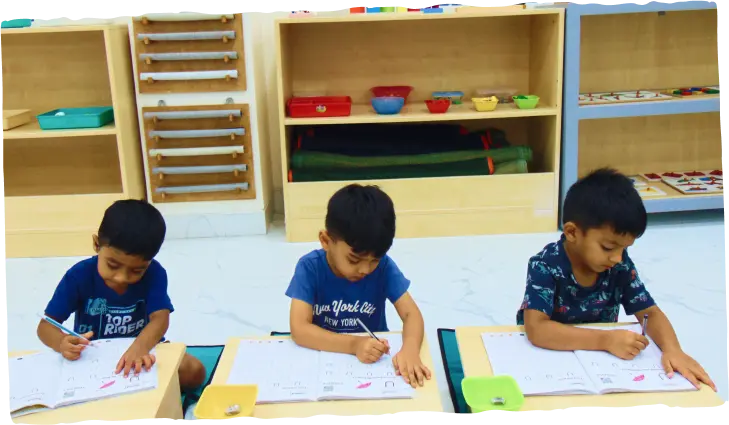
Rather than relying primarily on whole-class instruction, Montessori environments are carefully prepared around children’s developmental needs. Children typically work with specially designed materials, make choices within clear boundaries and receive lessons from a trained Montessori adult.
The environment itself plays an important role. Materials are arranged at a child’s level, activities have a specific purpose, and children are encouraged to return materials after completing their work.
Montessori classrooms also commonly use mixed-age groups, often covering a three-year span such as ages 3–6. This allows younger children to observe older children while older children have opportunities to reinforce their learning by helping younger classmates.
So, Montessori is not simply a collection of educational toys or activities. It is a broader approach involving the environment, materials, adult guidance and children’s independence.
Preschool vs Montessori: Key Differences
Understanding the differences becomes easier when you look at the child’s everyday experience.
1. Classroom Structure
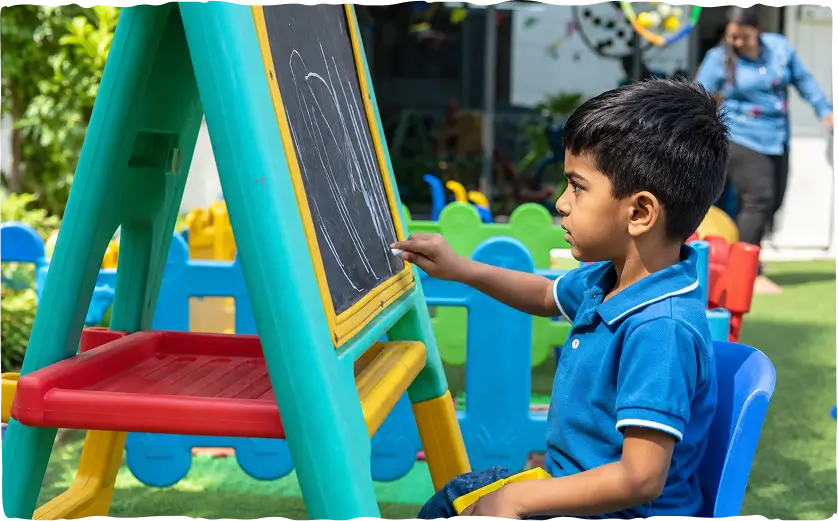
Preschool: Many preschools follow a planned daily timetable. Children may participate in group activities at predetermined times, such as circle time, worksheets, art, storytelling, outdoor play and snack time.
Montessori: Montessori classrooms generally provide longer periods for children to work independently or in small groups. Children can choose activities from the available materials while working within classroom expectations.
This doesn’t mean Montessori has no structure. In fact, the structure is often built into the environment, routines and sequence of learning rather than being driven entirely by a timetable.
2. Teacher's Role
In many traditional preschool settings, the teacher takes a more active instructional role. They may introduce an activity to the whole class, explain the task and guide children through it together.
In Montessori, the adult is commonly described as a guide. The guide observes children’s development, introduces materials at appropriate moments and allows children to work independently after the presentation.
Think of the difference this way: A preschool teacher might say, “Everyone, let’s make a triangle using these sticks.”
A Montessori guide may introduce the relevant material to a child and then allow that child to explore, repeat and refine the activity independently.
Neither approach automatically guarantees better learning. The quality of the teacher and the suitability of the environment remain extremely important.
3. Learning Pace
Children do not all learn at exactly the same speed. In a group-oriented preschool activity, children may often be expected to participate in the same lesson at roughly the same time.
Montessori environments place greater emphasis on individual progression. A child may spend more time practising one activity before moving towards a more advanced one.
For instance, one child may be exploring letter sounds while another is practising handwriting. The environment is designed to accommodate different developmental stages within the same community.
4. Learning Materials
Preschools may use a broad range of resources, including books, flashcards, puzzles, craft supplies, toys, worksheets and digital tools, depending on the school’s approach.
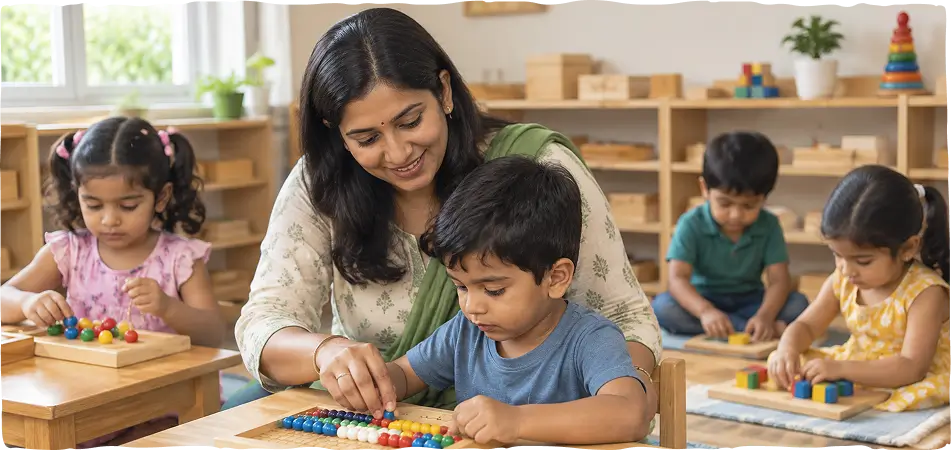
Montessori education uses specifically designed materials that isolate particular concepts and skills. Many materials are tactile and sequential, allowing children to move from concrete experiences towards more abstract understanding.
For example, instead of simply being told that one quantity is greater than another, a child may physically work with materials that allow them to see, touch and compare quantities.
5. Independence
Independence is an important goal in Montessori education. Children may be encouraged to pour their own water, arrange their workspace, choose an activity, complete it, identify mistakes through materials designed with feedback and return everything to its proper place.
These may look like small actions, but they help children practise responsibility and coordination.
Preschools can also develop independence, particularly through classroom routines such as putting away toys, managing personal belongings or participating in group tasks. The difference is often how systematically independence is incorporated into the educational approach.
6. Mixed-Age vs Same-Age Groups
This is one of the more visible differences. Many preschools organise children primarily according to age, for example, a nursery group, junior kindergarten group and senior kindergarten group.
Montessori classrooms commonly use mixed-age communities. A 3–6 classroom, for example, may bring younger and older children together.
Imagine a four-year-old struggling with an activity. Instead of only turning to an adult, they may observe a five-year-old completing something similar.
At the same time, the older child gets an opportunity to practise patience, communication and responsibility.
7. Group Activities vs Individual Choice
Preschool classrooms often include group experiences because they can be valuable for developing communication, cooperation and social skills.
Montessori also includes social interaction, but children frequently have opportunities to select individual work or collaborate in small groups.
According to Montessori principles, freedom does not mean doing anything without boundaries. Children make choices within an organised environment and are expected to respect other people’s work and the classroom community.
What About Academics?
This is where many parents have concerns. “Will my child learn enough?” The answer depends less on the label and more on the actual school.
A good preschool can provide strong foundations in language, numeracy, communication and school readiness. A well-implemented Montessori environment can also provide rich academic experiences through hands-on materials and carefully sequenced activities.
Montessori classrooms can include language, mathematics, geography, science, practical life, sensory work, art, music and movement.
Interestingly, research on Indian preschool provision also shows how varied preschool models can be. A recent Economic Journal study notes that private preschools in India often emphasise pre-primary instruction and early academic skills, while preschool enrolment reached 80% among four-year-olds in 2022.
The important question, therefore, is not simply “Which system teaches more?”
Ask instead, “How does my child learn best, and which environment will help them develop confidently?”
How Should Parents Choose Between Preschool and Montessori?
Start by observing your child. Does your child enjoy choosing activities independently? Do they become deeply engaged when allowed to repeat something? Do they enjoy practical tasks such as sorting, pouring, arranging or building?
A Montessori environment may align naturally with those preferences.
On the other hand, if your child enjoys group storytelling, collaborative games, teacher-led activities and a more predictable group routine, a traditional preschool environment may feel comfortable. Then consider practical factors:
Look at the classroom
Is it calm, organised and age-appropriate? Are children actively engaged rather than simply being entertained?
Meet the teachers
Ask about their qualifications, experience and approach to managing children’s individual needs.
Understand the curriculum
Don’t choose based solely on labels. Ask what children actually do throughout a typical day.
Consider your child’s personality
An environment that works wonderfully for one child may not feel equally comfortable for another.
Think beyond academics
Communication, confidence, self-care, social development, concentration and curiosity are also important parts of early childhood education.
Preschool vs Montessori: There Is No One-Size-Fits-All Answer
The preschool vs Montessori discussion does not need to end with declaring one approach the universal winner.
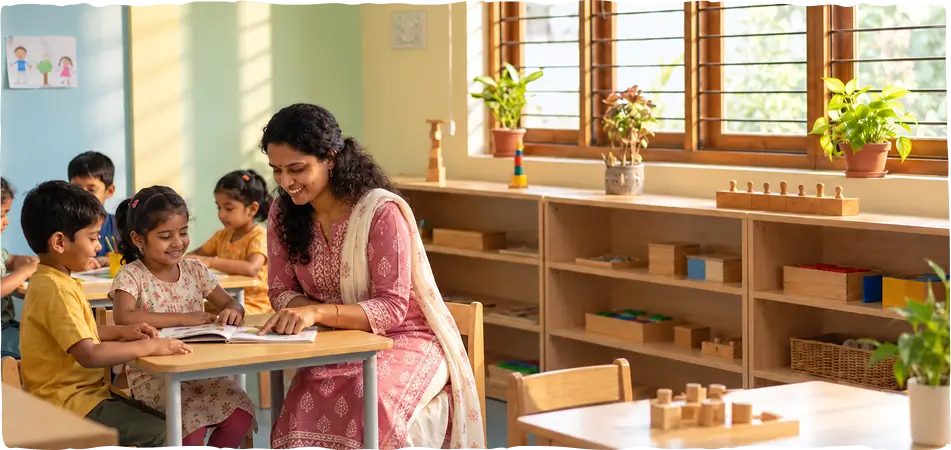
Both can offer valuable early learning experiences when thoughtfully designed and delivered by capable educators.
The better question is: “Which environment gives my child the right balance of learning, independence, guidance, social connection and emotional comfort?”
If you are exploring preschools in Bangalore, visit the campus, observe the classroom and speak with educators before making a decision. And if you are specifically researching Montessori schools in Bangalore, take time to understand whether the school genuinely follows Montessori principles rather than simply using Montessori materials.
After all, choosing a school is not about selecting the most fashionable educational label. It is about finding an environment where your child can learn with confidence, develop at their own pace and gradually become an independent learner.
Conclusion
At Bodhi Montessori, the focus is on creating an environment where children can explore, engage, practise and grow with purpose. If you are considering Montessori education for your child, connect with Bodhi Montessori to understand the learning environment, classroom approach and educational philosophy firsthand.
Visit Bodhi Montessori and discover an early learning environment designed to nurture curiosity, confidence and independence.
TABLE OF CONTENTS
SHARE THIS ARTICLE
Frequently Asked Questions

Yes. Parents can encourage children to manage simple routines such as putting away toys, choosing between suitable options, helping with basic household tasks and attempting self-care activities.