
15 Essential Life Skills Every Preschool Child Should Learn Before Kindergarten
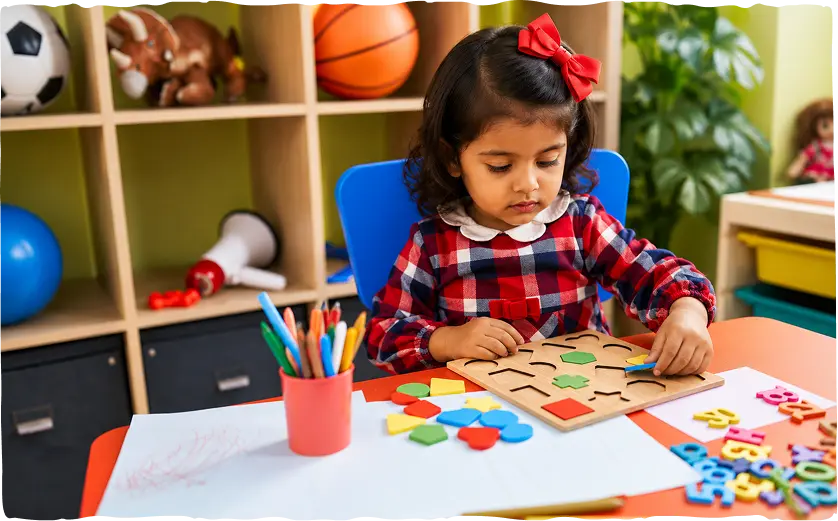
Starting kindergarten is an exciting milestone, but for many parents, it also comes with a common worry: “Is my child truly ready?” While knowing the alphabet, numbers, and colors is important, these academic skills alone do not guarantee a smooth transition into school. Children who struggle to communicate, manage emotions, or follow simple routines often find it harder to adapt to a structured classroom environment.
Research highlights why life skills matter just as much as academics. According to the Harvard Center on the Developing Child, executive function skills such as self-control, working memory, and flexible thinking are among the strongest predictors of long-term academic and social success.
This is where quality preschool education makes a significant difference. A thoughtfully designed learning environment helps children build confidence, independence, and resilience through meaningful daily experiences rather than memorization. Many parents exploring kindergarten schools in Bangalore are now prioritizing institutions that focus equally on life skills and academic readiness.
1. Communicating Thoughts Clearly
Children should feel comfortable expressing what they need, think, or feel. This doesn’t mean speaking perfectly. Instead, they should be able to say things like:
- “I’m thirsty.”
- “Can you help me?”
- “I don’t understand.”
- “I feel sad.”
For example, if a child accidentally spills water, communicating honestly instead of crying or staying silent shows growing confidence and emotional maturity. Teachers can support this through storytelling, role-play, and group conversations that encourage every child to participate.
2. Listening and Following Instructions
A kindergarten classroom involves routines, transitions, and activities that require children to listen carefully. Make sure to put simple directions such as:
- Put your shoes away.
- Wash your hands.
- Line up with your classmates.
- Pack your bag.
It may seem easy, but they require focus and self-control. Parents can practice this at home through games like “Simon Says” or by giving two-step instructions during everyday activities.
3. Developing Independence
One of the biggest confidence boosters for young children is learning to do things independently. Some of the examples include:
- Wearing shoes
- Carrying their own backpack
- Packing toys away
- Opening their lunch box
- Washing hands without reminders
Instead of rushing to help every time, allowing children a few extra minutes to complete tasks builds problem-solving abilities and self-confidence.
4. Sharing and Taking Turns
Learning to share isn’t always easy for preschoolers, but it becomes essential once they enter a classroom filled with peers. Children who practice taking turns during games, art activities, or playground time understand that everyone deserves an opportunity.
Imagine two children wanting the same puzzle. Rather than arguing, waiting patiently for a turn teaches respect and cooperation. These experiences create stronger friendships later in school.
5. Managing Emotions
Every child experiences frustration, excitement, disappointment, and anger. Here the goal isn’t to eliminate these emotions but to help children recognize and manage them. For example:
Instead of throwing blocks after losing a game, a child learns to say, “I’m upset because I wanted to win.” Teachers often use emotion cards, breathing exercises, and storytelling to help children identify feelings in healthy ways.
6. Building Problem-Solving Skills
Children constantly face small challenges. Here are examples:
- A toy won’t fit together.
- Their drawing tears.
- Someone takes their favorite crayon.
Rather than immediately fixing every problem, adults can ask:
- “What do you think we should do?”
- “Can you try another way?”
- “Who could help you?”
These conversations encourage creative thinking instead of dependency.
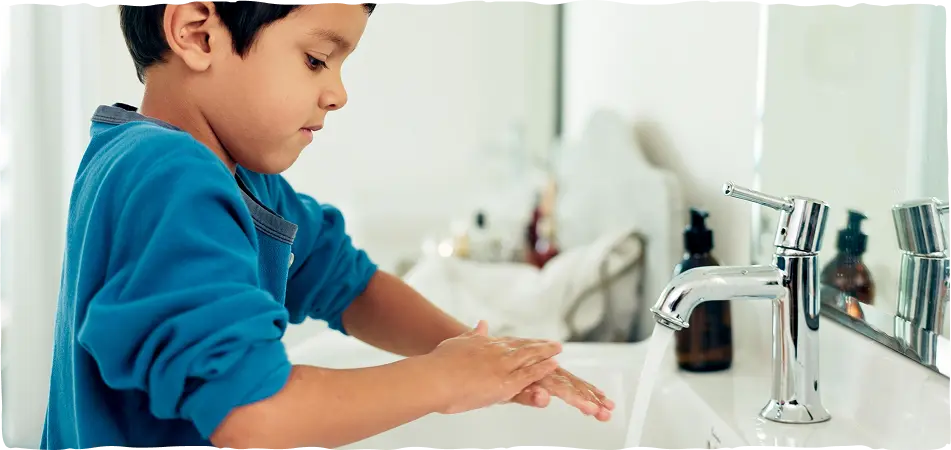
7. Practicing Good Hygiene
You have listened to the proverb “Healthy habits begin early”. Before kindergarten, children should understand basic routines like:
- Washing hands before meals
- Covering coughs and sneezes
- Using tissues properly
- Throwing rubbish in bins
- Brushing teeth regularly
During flu seasons, these habits protect both individual children and entire classrooms.
8. Respecting Routines
Kindergarten follows structured schedules. Children who understand routines transition more smoothly between activities. Lets take an example: Morning arrival → Circle time → Snack → Outdoor play → Story time → Lunch
Predictable routines provide security while helping children understand responsibility and time management.
9. Building Friendships
Making friends requires several skills combined:
- Greeting others
- Introducing themselves
- Playing cooperatively
- Including others
- Showing kindness
For example, inviting another child to join a block-building activity teaches empathy and inclusion naturally. Teachers often encourage collaborative activities rather than individual competition during the early years.
10. Basic Decision-Making
Giving children age-appropriate choices helps develop confidence. Examples include:
- Which story should we read?
- Would you like apples or bananas?
- Which color should we paint with first?
Making small decisions prepares children to think independently instead of constantly waiting for instructions.
11. Taking Responsibility
Responsibility begins with simple everyday tasks. Your children can easily can learn to:
- Put toys back
- Carry their own water bottle
- Return books to shelves
- Feed classroom plants
- Clean up after art activities
All the above small habits gradually build accountability and respect for shared spaces.
12. Developing Patience
Instant gratification has become increasingly common, making patience a valuable life skill. Whether waiting in line, allowing classmates to finish speaking, or waiting for lunch, children learn that not everything happens immediately. Simple board games and group activities naturally strengthen this ability.
13. Showing Curiosity
Curious children become enthusiastic learners. Rather than memorizing facts, they begin asking questions like:
- Why do leaves fall?
- How does rain happen?
- Why do birds fly?
Teachers who encourage exploration help children develop a lifelong love of learning instead of studying only for answers. This curiosity forms the heart of meaningful preschool education, where children learn by observing, experimenting, and discovering the world around them.
14. Working as Part of a Team
Many kindergarten activities involve collaboration rather than individual performance. Examples include:
- Building a tower together
- Creating classroom artwork
- Gardening
- Cleaning activity stations
- Group storytelling
Children learn that teamwork often produces better outcomes than working alone. For instance, four children working together to build a cardboard city experience cooperation, communication, and shared responsibility all at once.
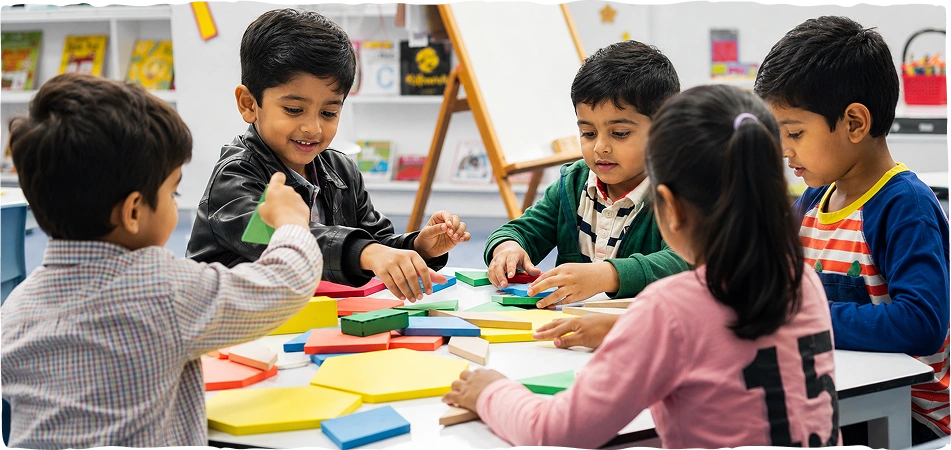
15. Loving Learning
Perhaps the most valuable skill isn’t academic at all. Children should associate learning with curiosity, creativity, and enjoyment, not pressure. Reading together, exploring nature, solving puzzles, singing songs, and asking questions all help build positive learning experiences.
When children genuinely enjoy discovering new things, they naturally become more engaged students throughout school. Parents searching for kindergarten schools in Bangalore increasingly look beyond academic rankings and focus on schools that nurture this love for learning through child-centered experiences.
How Parents Can Support These Skills at Home
Parents don’t need expensive learning materials or long study sessions. Simple daily routines can make a remarkable difference. Try activities such as:
- Cooking together to teach responsibility.
- Reading bedtime stories to improve communication.
- Allowing children to dress themselves.
- Playing board games to develop patience.
- Visiting parks for social interaction.
- Encouraging children to help set the dining table.
- Asking open-ended questions during conversations.
- Praising effort rather than perfection.
For example, instead of saying, “Good job because you finished first,” try saying, “I’m proud of how patiently you kept trying.”
Why Life Skills Matter More Than Early Academics
Many parents feel pressured to teach reading, writing, and mathematics before kindergarten. However, educators consistently observe that children with strong emotional, social, and practical skills adapt much faster to classroom learning.
A child who can communicate confidently, follow instructions, solve problems, and cooperate with others is more prepared to succeed than one who has memorized advanced academic concepts but struggles socially.
This balanced approach lies at the heart of quality preschool education, where learning extends beyond books to prepare children for real-life experiences.
CONCLUSION
Kindergarten readiness is about much more than recognizing letters or counting numbers. It is about helping children become confident, curious, independent, and emotionally secure individuals who are excited to learn and explore.
The right early learning environment nurtures these essential life skills through hands-on experiences, meaningful interactions, and child-led discovery. If you’re looking for a school that combines academic excellence with holistic child development, Bodhi Montessori provides a nurturing Montessori environment where every child is encouraged to grow at their own pace while building the confidence and life skills needed for lifelong success.
TABLE OF CONTENTS
SHARE THIS ARTICLE
Frequently Asked Questions

Children begin developing life skills from infancy, but ages three to five are particularly important for building independence, communication, emotional regulation, and social confidence before kindergarten.
Life skills help children adapt more easily to classroom routines, build friendships, communicate effectively, solve problems independently, and participate confidently in learning activities.
Absolutely. Everyday activities like dressing independently, helping with simple chores, reading together, playing cooperative games, and encouraging children to make small decisions all strengthen important life skills.
Montessori classrooms encourage hands-on learning, independence, responsibility, practical life activities, collaboration, and self-directed exploration, helping children develop confidence alongside academic readiness.
Look for a preschool that focuses on holistic child development, experienced educators, safe learning environments, play-based and practical learning opportunities, strong parent communication, and programs that prepare children socially, emotionally, and academically for kindergarten.