
15 Fun Memory Activities for Preschoolers to Boost Brain Development
Early childhood is one of the most important stages for brain development. During the preschool years, children absorb information quickly, build emotional connections, and develop thinking skills that shape their future learning abilities. Engaging children in memory activities for preschoolers helps improve concentration, cognitive skills, problem-solving abilities, and overall mental development in a fun and interactive way.
This is why parents and teachers are always searching for engaging ways to improve focus, attention span, and memory in young children. The good news is that children learn best through play. Fun games, movement-based tasks, storytelling, and creative activities can strengthen memory skills without making learning feel stressful.
In fact, studies in early childhood education show that interactive play helps improve neural connections in the developing brain.
If you are looking for exciting and educational ways to support your child’s development, these memory activities for preschoolers can make learning enjoyable while boosting brain function naturally.
Why Memory Activities Matter in Preschool Years
Before we explore the activities, it is important to understand why memory-building games are so valuable for preschoolers. Memory skills help children:
- Follow instructions
- Learn new words
- Recognise patterns
- Improve concentration
- Build problem-solving abilities
- Strengthen listening skills
- Develop confidence in learning
When children practice remembering colors, sounds, objects, or sequences, their brains become better at processing and storing information. These early cognitive skills later support reading, maths, communication, and classroom learning.
The best part? Preschoolers do not need complicated lessons. Simple daily games can have a big impact on brain development.
1. Matching Card Game
Matching games are classic yet highly effective memory activities for preschoolers. Place picture cards face down and encourage children to find matching pairs by remembering where each image is located.
You can use:
- Animal cards
- Fruit pictures
- Alphabet cards
- Shapes and colors
This activity improves visual memory, focus, and attention span.
For example, a child may remember that the apple card was placed near the corner after flipping it earlier. This strengthens memory recall and observation skills at the same time.
2. “What’s Missing?” Tray Game
3. Story Chain Activity
Storytelling is excellent for language and memory development. Begin a story with one sentence like: “Once upon a time, a little rabbit found a red balloon.” Then ask the child to repeat the sentence and add another line.
Each player continues remembering previous details while adding new parts to the story. This game improves sequencing skills, listening, creativity, and verbal memory.
4. Simon Says
“Simon Says” is not just a fun movement game it also strengthens listening and memory skills. Give instructions like:
- “Simon says touch your nose.”
- “Simon says jump twice.”
- “Simon says, clap three times.”
Children must carefully remember and follow instructions only when “Simon says” is included. This activity supports auditory processing and improves attention control in preschoolers.
5. Picture Observation Game
Show a colorful picture book page or scene for one minute. Then hide it and ask questions such as:
- How many animals did you see?
- What color was the balloon?
- Was there a tree in the picture?
This activity improves visual memory and observation abilities. Picture games are among the most enjoyable memory activities for preschoolers because they combine learning with curiosity and imagination.
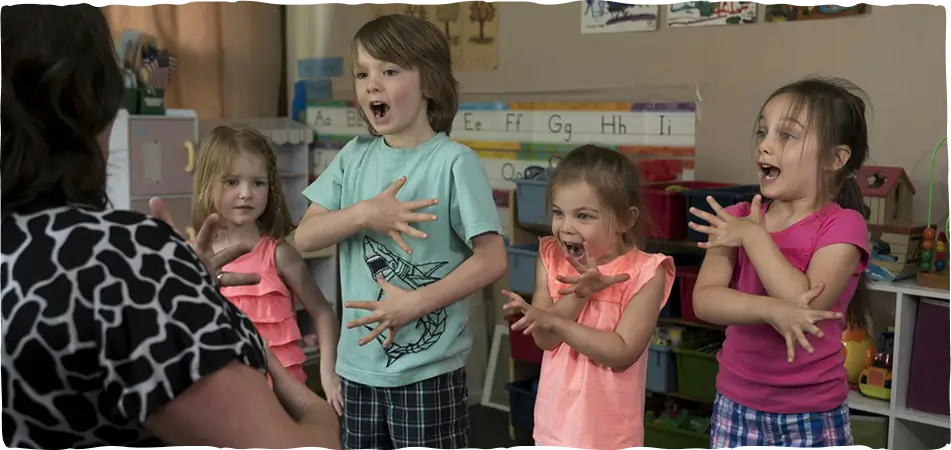
6. Rhyming Songs and Action Poems
Preschool children remember information more easily through rhythm and repetition. Singing rhymes with actions helps strengthen memory pathways in the brain.
Songs like:
- Twinkle Twinkle Little Star
- Wheels on the Bus
- Head, Shoulders, Knees, and Toes
You can encourage children to remember words, actions, and sequences together. Research in child psychology suggests that music-based learning improves both memory retention and language development in young children.
7. Color Sequence Challenge
Arrange colored blocks or cups in a sequence such as: Red – Blue – Yellow – Green
Show the sequence briefly, then mix the objects and ask the child to recreate the order from memory.
This simple game improves pattern recognition and sequential memory. You can make the challenge harder over time by increasing the number of colors.
8. Treasure Hunt Memory Game
Hide toys or objects around the room and provide memory-based clues.
For example: “You will find the teddy bear near something cold.”
The child must remember clues while searching around the house or classroom. Treasure hunts build problem-solving skills while making learning active and exciting.
9. Name and Sound Animal Game
Show animal pictures and ask children to remember both the name and sound. For example:
- Cow says “moo”
- Dog says “woof”
- Duck says “quack”
Later, ask: “Which animal said quack?” This game improves auditory memory and word association. Young children especially enjoy animal-based memory activities for preschoolers because they feel playful and interactive.
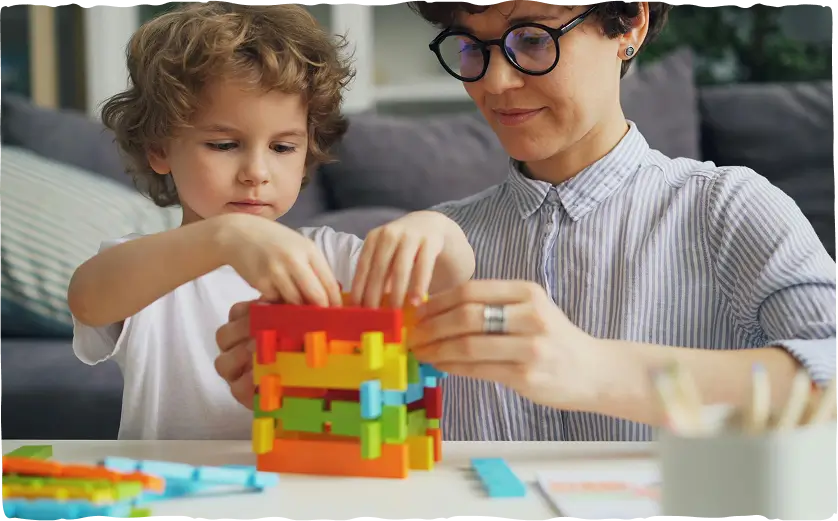
10. Build and Repeat with Blocks
Create a small tower or pattern using building blocks. Let the child observe it carefully and then recreate the structure from memory. This activity develops:
- Visual memory
- Spatial awareness
- Focus
- Fine motor skills
For example, if you build a blue-red-blue tower, the child must remember both color placement and arrangement order.
11. Daily Routine Recall
Ask preschoolers questions about their day:
- What did you eat for breakfast?
- Which game did you play first?
- Who sat beside you in class?
Simple conversations about daily routines help children practice recalling events in sequence. This strengthens long-term memory and communication skills naturally.
12. Clap Pattern Copy Game
Create a clapping pattern such as: Clap – Clap – Pause – Clap. Now ask the child to repeat the exact sequence.
This activity improves auditory memory, rhythm recognition, and concentration. You can also include foot taps or table taps to make the game more exciting.
13. Alphabet Tray Memory Game
Write several letters on a tray or board. Let the child observe them briefly before covering the tray.
Ask questions like:
- Which letter was next to A?
- Did you see the letter M?
- Which letter was blue?
This game helps preschoolers strengthen both memory and early literacy skills.
14. Puzzle Play
Simple puzzles are powerful brain-boosting tools for preschool children. Whether it is shape puzzles, animal puzzles, or number puzzles, children learn to remember patterns and placements while solving problems.
According to child development experts, puzzle-solving activities improve cognitive flexibility and memory retention during early learning stages. Puzzles also teach patience and logical thinking.
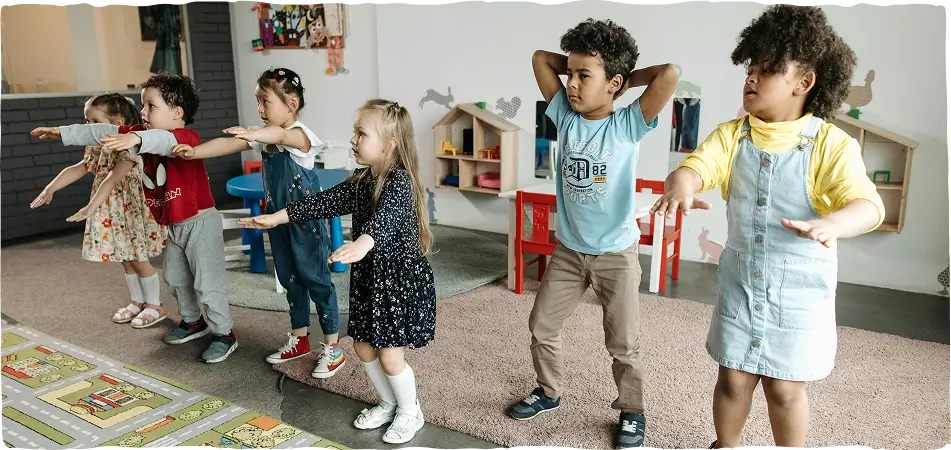
15. Dance and Freeze Game
Play music and encourage children to dance freely. When the music stops, call out an action they must remember, such as:
- Stand on one foot
- Touch your shoulders
- Raise both hands
Children must quickly recall and perform the correct movement. This activity combines physical activity with brain stimulation, helping children improve memory while staying active.
Tips to Make memory activities for preschoolers More Effective
While engaging in memory activities for preschoolers, the goal should always be fun rather than pressure. Children learn best in positive and encouraging environments.
Here are a few helpful tips:
Keep Sessions Short
Preschoolers have shorter attention spans. Activities lasting 10 to 15 minutes are usually ideal.
Use Positive Encouragement
Celebrate effort instead of perfection. Praise helps build confidence and motivation.
Repeat Activities Regularly
Repetition strengthens memory pathways. Familiar games become more effective over time.
Include Movement
Children remember better when learning involves physical activity and interaction.
Reduce Screen Distractions
Interactive human play supports deeper learning compared to passive screen time.
How These Activities Support Brain Development
Memory games do much more than entertain children. They actively strengthen important areas of brain development. These activities improve:
- Cognitive processing
- Listening skills
- Attention span
- Emotional confidence
- Language growth
- Problem-solving abilities
- Decision-making skills
Most importantly, they create positive learning experiences during a critical stage of development.
When children enjoy learning, they naturally become more curious, engaged, and confident learners.
CONCLUSION
Building strong memory skills during the preschool years can support lifelong learning and academic success. The best approach is playful interaction, creativity, and meaningful engagement.
These simple yet effective memory activities for preschoolers help children develop concentration, observation, communication, and recall abilities while having fun every day. Whether it is storytelling, puzzles, matching games, or music activities, every playful moment becomes an opportunity for brain growth.
At Bodhi Montessori School, we believe early childhood learning should be engaging, creative, and development-focused. Our learning environment encourages children to explore, think independently, and build essential cognitive skills through interactive activities and holistic education methods.
If you are looking for a nurturing school that supports your child’s overall growth, Bodhi Montessori School provides the right foundation for lifelong learning success.
TABLE OF CONTENTS
SHARE THIS ARTICLE
Frequently Asked Questions

Memory activities help preschoolers improve concentration, listening skills, problem-solving abilities, and cognitive development. These activities also prepare children for better learning performance in school.
Preschoolers can benefit from short memory-building activities every day. Even 10 to 15 minutes of engaging play-based learning can positively support brain development.
Some of the best activities include matching card games, storytelling, puzzles, treasure hunts, rhyming songs, and “What’s Missing?” games. These activities are simple, fun, and highly effective.
Yes, memory games encourage children to focus, observe details, and follow instructions carefully. Regular practice can gradually improve attention span and information retention.
Parents can introduce simple memory activities as early as 2 to 3 years old. Preschool years are an ideal stage because the brain develops rapidly during early childhood.