Home > Blogs > Coginitive Development Activities For Early Childhood in Preschools

Cognitive Development Activities for Early Childhood in Preschools

Sometimes you look at a preschool classroom and think, “They are just playing or sorting colors. If you do not intentionally structure those activities, you lose huge learning opportunities, even if they seem simple. Research shows that nearly 90% of brain development happens before the age of five. That means early childhood cognitive development is foundational. The neural connections built in these years directly influence language skills, problem-solving ability, memory, and even emotional regulation later in life. So, the real question becomes: Are children just being kept busy or are they being cognitively challenged in age-appropriate ways? Let’s explore how structured preschool cognitive development activities shape thinking skills, and what that looks like inside a high-quality preschool environment.

Why Cognitive Development in Preschool Years Matters

Cognitive development refers to how your children think, explore, remember, and solve problems. It also includes various aspects of attention span, such as logical reasoning, pattern recognition, memory retention, and even decision-making.

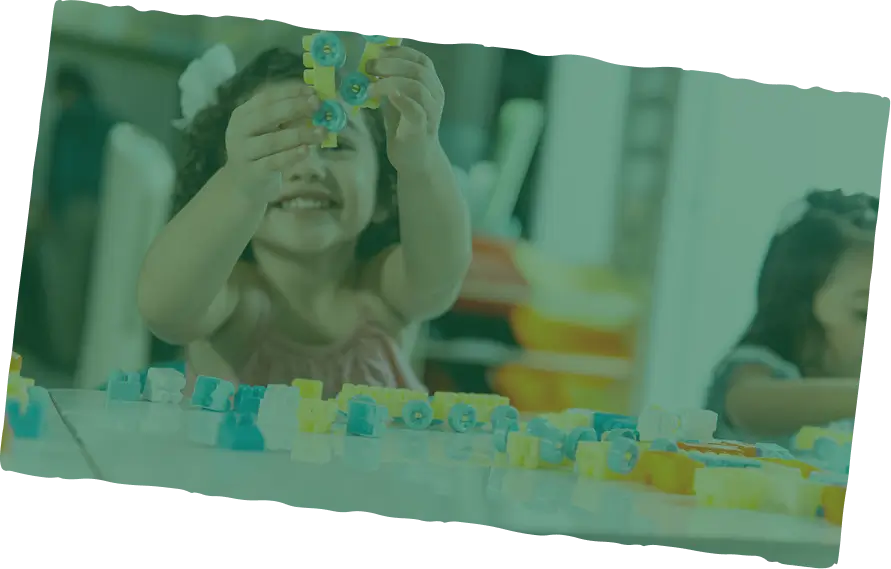
You might notice a four-year-old sorting blocks by color without being told. And that is what we call one of the core examples of cognitive development in early childhood.

According to developmental studies, children exposed to structured cognitive stimulation in preschool perform significantly better in reading and math by Grade 3.

So when we talk about cognitive development activities for early childhood, we are talking about building neural architecture.

1. Working Memory Development (Ages 3–5)

Working memory is the ability to hold and manipulate information briefly. It directly predicts reading and math readiness more strongly than early IQ scores.

Instead of asking children to repeat a story simply, you can structure preschool cognitive development activities with layered recall.

For example:
  • At age 3: Children listen to a 3-sentence story and identify characters.
  • At age 4: They recall events in the correct order.
  • At age 5: They predict alternate endings or explain cause-and-effect relationships.
A properly designed memory activity might look like this: The teacher reads: “The blue bird found a seed, planted it, and waited for rain.”
The child is then asked:
  • What did the bird find?
  • What happened after planting?
  • Why was rain important?
That final “why” activates reasoning on top of memory retrieval. And over time, these structured activities for cognitive development increase memory span from holding 2 units of information to 4 to 5 units by age five.

2. Pattern Recognition as Mathematical Foundation

Pattern recognition in children is about developing predictive logic. When children recognize and extend patterns, they are learning to anticipate outcomes. That predictive ability becomes foundational for mathematics, coding logic, and analytical reasoning.

In advanced preschool cognitive development activities, patterns become layered such as size plus shape and color. Children must track multiple variables at once.

That cognitive load strengthens working memory capacity.

And the most exciting? Children who master pattern complexity early often demonstrate stronger problem-solving fluency in primary school mathematics.

Questioning That Builds Reasoning

The quality of questioning in preschool matters enormously.

If a teacher asks, “What color is this?” the child retrieves information.
But if the teacher asks, “Why do you think this block does not balance like the other one?” the child begins reasoning.

That “why” question activates higher-order thinking.

Strong early childhood cognitive development depends heavily on encouraging explanation, not just answers. When children explain their thinking, they strengthen neural pathways connecting language and logic.

You can actually observe cognitive growth when a child moves from “It fell” to “It fell because this side was heavier.”

Sensory Play With Cognitive Intent

Sensory play often gets labeled as emotional development. But when structured intentionally, it becomes cognitive training for your children.

Imagine a water table experiment with three cups, one with saltwater, one with sugar water and one with plain water. Then place an egg in each of the cup.

Before observing, always ask children to predict which egg will float. Now you have hypothesis formation.

Testing. Observation. Comparison. Conclusion. That sequence is scientific reasoning in its earliest form. These are powerful preschool cognitive development activities because they combine curiosity with logic.

These experiments tell us that the child is watching with consternation and they are forming mental models of cause and effect.

Executive Function — The Hidden Skill

Executive function in children includes their impulse control, flexible thinking, and task switching. It is often overlooked, but it determines classroom readiness more than children’s raw intelligence.

Games like modified “Simon Says” require children to filter instructions. If the teacher says, “Touch your nose when I say triangle,” the child must understand the automatic reaction and listen carefully.

That filtering process strengthens their cognitive control. Even research from developmental psychology studies consistently shows that executive function in preschool strongly predicts reading and math success by Grade 2.

This is why cognitive development activities for early childhood must include impulse regulation and multi-step instruction practice.

Language as Cognitive Architecture

It is important for parents and teachers to understand that cognitive growth and language development are inseparable. When children engage in storytelling circles and are encouraged to expand on ideas, they build conceptual depth.

For example, instead of asking, “What is happening in this picture?” a teacher might ask, “What do you think happened before this moment?”

Now the child must think backward in sequence, which strengthens temporal reasoning.

These small shifts within preschool cognitive development activities build narrative intelligence in your children, which later supports reading comprehension and structured writing.

Technology as a Support Tool

Nowadays, the role of technology in preschool must be purposeful. Passive screen time has little cognitive value, but adaptive learning tools that adjust difficulty based on performance can enhance endurance in problem-solving.

Some preschools now use simple interactive applications that increase puzzle complexity once a child demonstrates mastery. That small adjustment strengthens children’s neural elasticity.

When technology complements hands-on exploration, it becomes a distraction. So, make sure to avoid and use it wisely.

Measuring Cognitive Growth Without Tests

Cognitive development in preschool is “never measured through exams”. It is observed through behavior. Sounds good right?

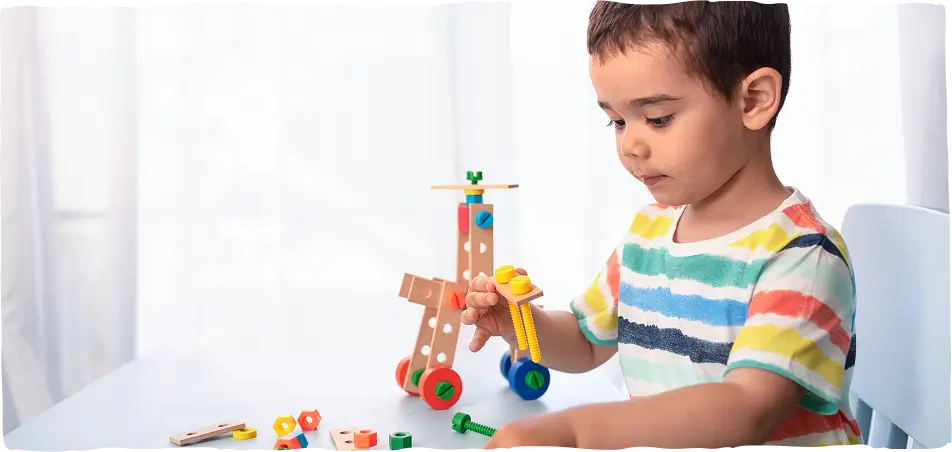
A child who can follow a three-step instruction without repetition shows working memory strength. And a child who adjusts a failed block structure without frustration shows cognitive flexibility. 

These are real, observable examples of cognitive skills forming in real time. 

When structured intentionally, preschool cognitive development activities create visible improvements in attention span, reasoning ability, and independent problem-solving. 

Conclusion

At the end of the day, preschool is all about building your children’s brain.

When preschool cognitive development activities are intentionally structured, then simple moments become powerful neurological investments.

As the saying goes, “In early childhood, small experiences build big brains.”

That is why choosing the right preschool environment matters so much. At Bodhi Montessori, every activity is thoughtfully designed to stretch your child’s thinking, strengthen memory, and nurture confident problem-solvers.

If you want your child to grow in a space where play meets purpose and curiosity meets cognitive strength, contact us and see how meaningful early learning truly looks.

Related Blogs

Admission Open for 2025-26


    This will close in 0 seconds

    Scroll to Top
    feature_schools_by_bodhi_montossori
    Admissions Open 2026 - 27