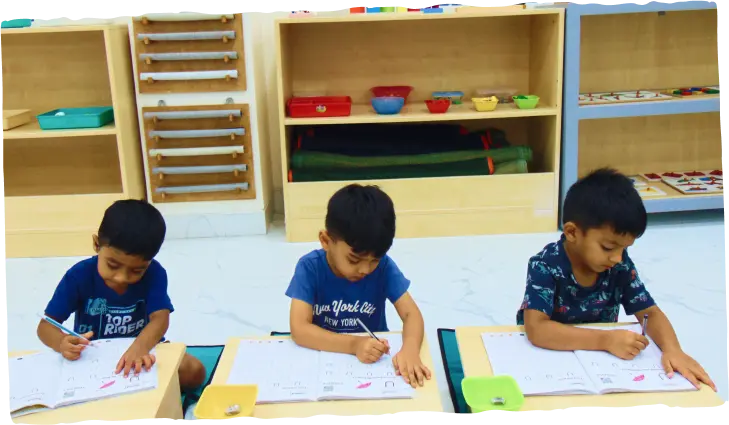

How to Improve Speaking Skills in Students: 10 Proven Tips for Students and Parents

Why is it that a student who scores well in exams suddenly struggles to speak when asked a simple question in class? You have probably seen this yourself. A child prepares thoroughly, understands concepts clearly, and even discusses them confidently at home, but the moment they are asked to speak in front of others, they hesitate, lose words, or go completely silent.
This is not rare, and in fact, a large number of students experience speaking anxiety in academic settings, and it often starts early. The issue is not intelligence, it is the lack of structured exposure to communication.
That is why understanding how to improve speaking skills in students development is critical today. Because in real-world scenarios, whether it is a classroom discussion, a college interview, or a future workplace, students are constantly expected to explain, present, and engage.
So the real question is not “Can your child speak?” It is “Can your child express clearly when it matters?” Let’s work on that.
Why Speaking Skills Are Important in Children
If you observe closely, the students who grow faster in school are not always the ones who study the most, they are the ones who participate the most. When a child speaks, three things happen simultaneously.
They organize their thoughts, they process information more deeply, and they receive immediate feedback, and this cycle strengthens both learning and confidence. On the other hand, when students consistently avoid speaking, they miss out on this loop. Over time, hesitation becomes a habit, and that habit slowly turns into self-doubt.
For example, consider a student who never asks questions in class, even when confused. That confusion remains unresolved, affecting understanding, performance, and, eventually, confidence.
This is why improving speaking skills in student life is not just about communication, it directly affects academic clarity, participation, and personality development.
How to Improve Speaking Skills in Students
1. Replace Routine Questions with Thought-Based Conversations
Most daily conversations with children are predictable, which limits their responses. When a child is repeatedly asked questions that require only short answers, they rarely get the opportunity to think and express. Instead, shift to questions that require explanation.
For example, instead of asking,
- “Did you finish your homework?”, try asking,
- “Which subject felt easiest today and why?”
This small shift encourages the child to reflect, structure their thoughts, and communicate them clearly. Over time, these micro-conversations build a strong foundation for how to improve speaking skills in student development.
2. Make Reading Aloud a Voice Training Exercise
Reading aloud is often recommended, but its real value lies in how it is practiced.
When students read with intention, paying attention to pauses, tone, and clarity, it becomes a form of voice training. For instance, asking a child to read a paragraph as if they are explaining it to a younger student forces them to simplify, emphasize, and communicate better.
This directly improves fluency and confidence, especially in academic settings where explanation matters more than memorization.
3. Use Mirror Practice to Build Self-Awareness
Many students struggle with speaking not because they lack words, but because they lack awareness of how they sound and appear.
Mirror practice solves this gap. When a student explains a topic in front of a mirror, they begin to notice hesitation, lack of eye contact, or unclear articulation. This self-observation is powerful because improvement becomes intentional.
For example, a student preparing for a class presentation can practice explaining the topic to a mirror for 5 minutes daily. Within a week, the difference in clarity and confidence is visible.

4. Integrate Speaking into Daily Activities
Speaking skills improve fastest when they are linked to real-life actions.
Instead of treating speaking as a separate task, integrate it into daily routines. Let the child explain a cricket match they watched, describe how a science experiment works, or even guide someone through a simple process like making tea.
These situations mimic real communication scenarios, making speaking practical rather than theoretical.
5. Develop Structured Thinking Through Storytelling
One of the biggest challenges students face is not speaking, but structuring what they want to say.
Storytelling helps solve this. When a child narrates an event, they naturally learn sequence, what happened first, what came next, and how it ended. This improves logical flow, which is essential for both academic answers and everyday communication.
For example, asking a child to explain their school day in detail builds both memory recall and clarity of expression.
6. Reduce the Fear of Immediate Correction
Frequent interruptions are among the fastest ways to reduce a child’s confidence in speaking.
When students know they will be corrected mid-sentence, they begin to focus more on avoiding mistakes than on expressing ideas. This breaks the natural flow of communication.
A better approach is to listen fully, acknowledge the effort, and then gently correct if needed. This builds both confidence and willingness to participate.
7. Introduce Opinion-Based Discussions
Speaking becomes meaningful when students feel their thoughts matter.
Introduce simple discussions with no “right answer,” such as whether school uniforms should be mandatory or whether online learning is effective. When students express opinions, they engage more deeply and speak more naturally. This practice is especially effective at building confidence for real-world scenarios such as interviews and group discussions.
8. Gradually Increase Speaking Exposure
Not every student is comfortable speaking in front of a large group immediately, and pushing them too quickly can create resistance.
Instead, build exposure gradually. Start with one-on-one conversations, move to small groups, and then to larger settings, such as class presentations. This step-by-step progression allows confidence to develop organically.
9. Strengthen Vocabulary Through Context, Not Memorization
A limited vocabulary often restricts expression, but memorizing word lists rarely solves the problem.
For example, if a child says, “The movie was very good,” you can respond with, “Yes, it was really engaging or exciting.” When students hear and use better words naturally, their speaking becomes more precise and impactful.
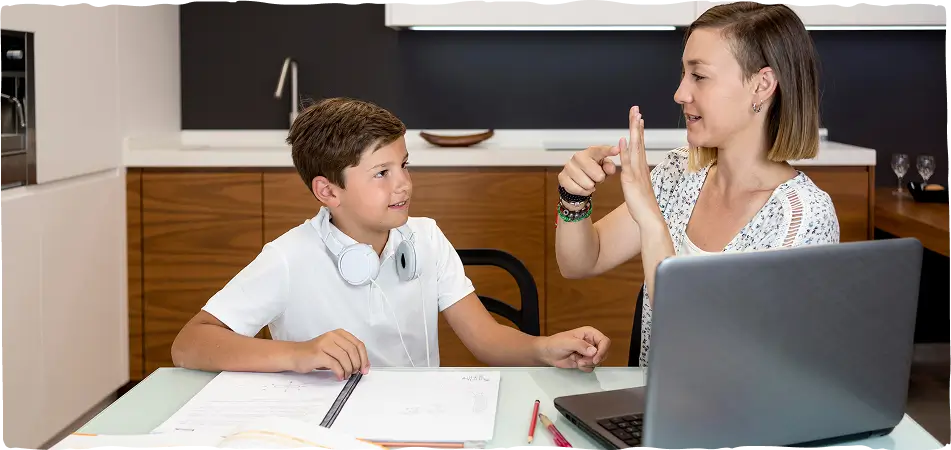
10. Model Clear and Confident Communication
Children observe communication patterns more than they follow instructions.
If they see adults speaking clearly, listening patiently, and expressing ideas confidently, they begin to adopt the same behavior.
On the other hand, if communication at home is rushed or unclear, students mirror that as well. Being conscious of how you communicate around children is one of the most effective ways to influence how they develop their speaking skills.
Conclusion
Improving speaking skills is not about making students speak more, it is about making them feel comfortable enough to express what they already know.
When students are given the right environment, consistent opportunities, and supportive guidance, their communication improves naturally. Along with it, their confidence, participation, and overall personality begin to evolve.
At Bodhi International School, communication is an integral part of everyday learning. Through interactive classrooms, activity-based learning, and structured opportunities for discussion and presentations, students are encouraged to express themselves confidently from an early stage.
TABLE OF CONTENTS
SHARE THIS ARTICLE
Frequently Asked Questions